orders@wingleader.co.uk
Messerschmitt Me110C
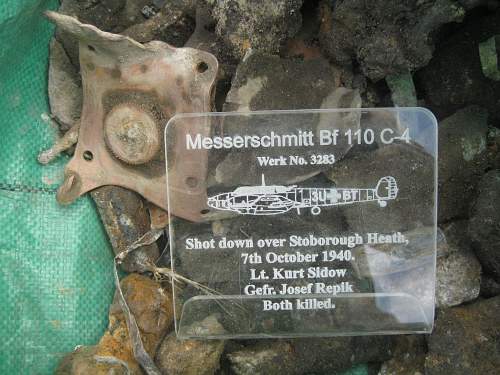
3U+BT of Zerstörergeschwader 26
Crew: Lt. Kurt Sidow (killed)
Gefr. Josef Repik (killed)
Date: 7th October 1940
Place: Stoborough Heath, near Wareham, Dorset
On 7th October 1940, the Luftwaffe launched its last major Me110 raid against the United Kingdom, targeting the Westland aircraft works at Yeovil. Escorted part of the way by Me109s, the force was intercepted over Dorset by Spitfires and Hurricanes of 152, 238, 601 and 609 Squadrons. In the ensuing combat, several aircraft were lost.
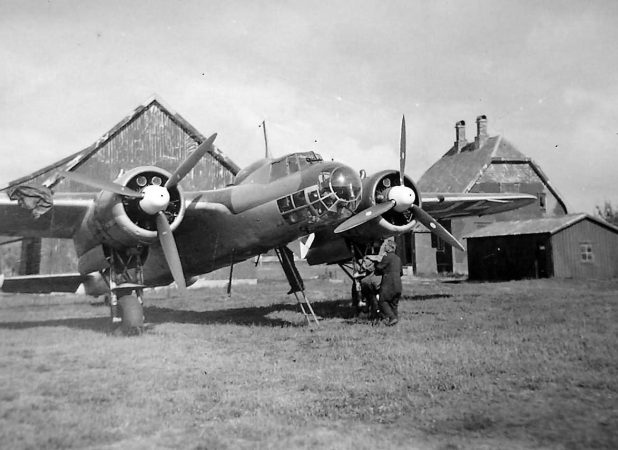
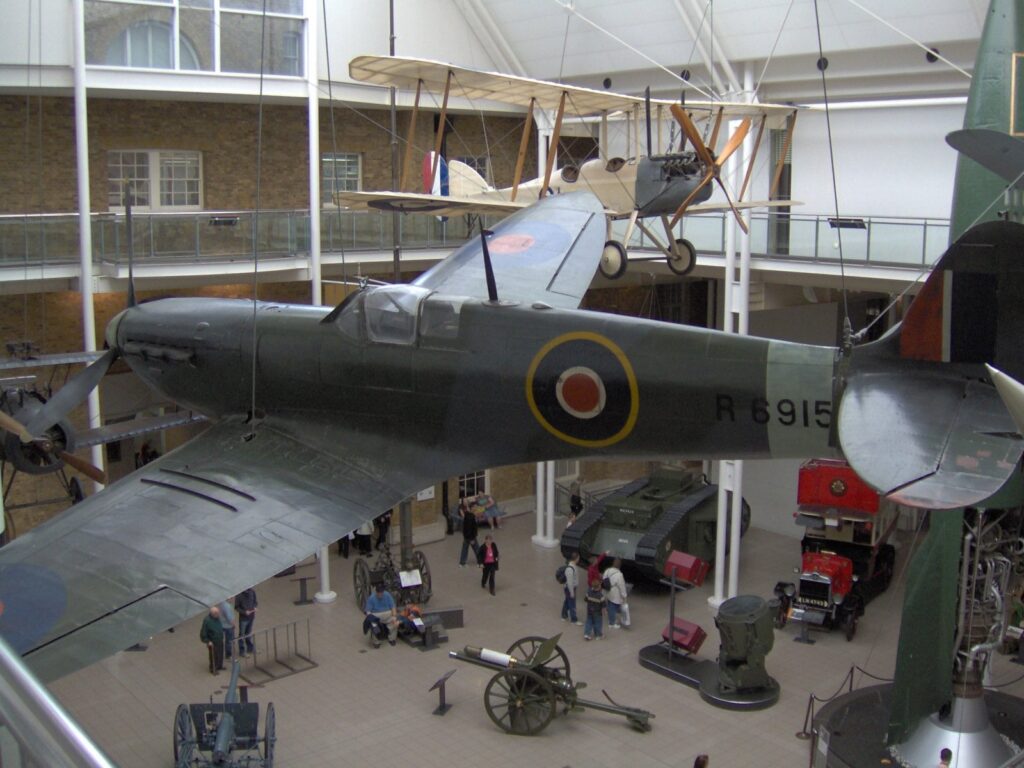
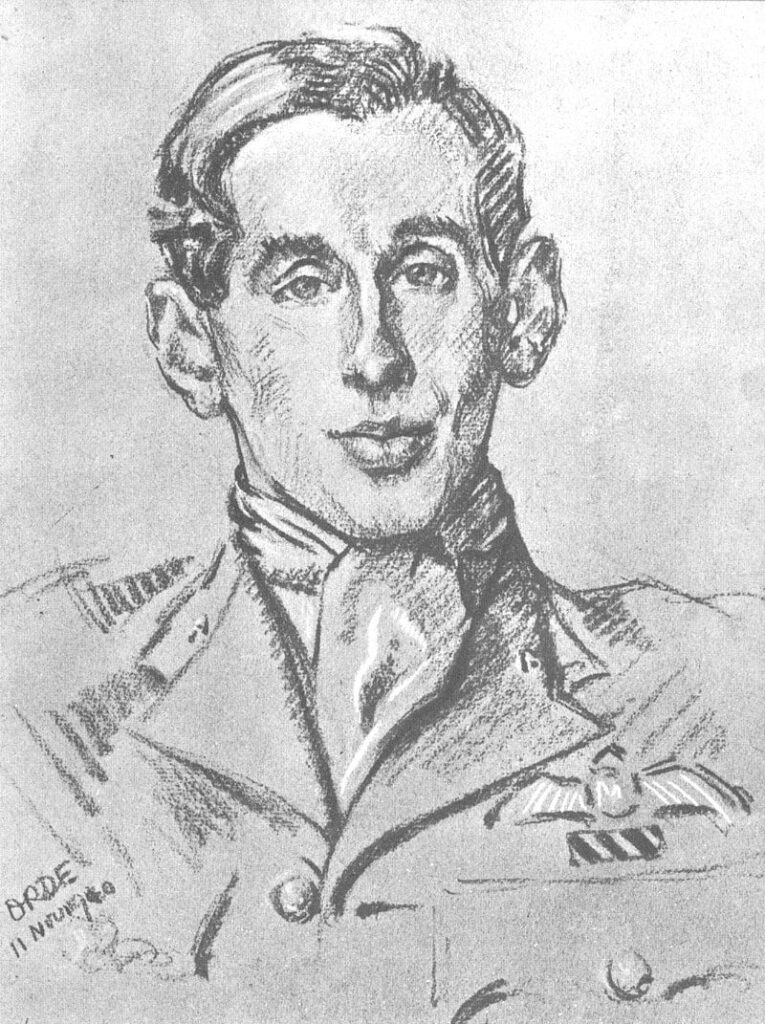
Among them was Messerschmitt Me110C 3U+BT of Zerstörergeschwader 26, flown by Lt. Kurt Sidow with Gefr. Josef Repik. Intercepted on the return leg by Spitfires of 609 Squadron, the aircraft was shot down by Flying Officer Dundas, flying Spitfire R6915 — the very machine that now hangs suspended from the ceiling of the Imperial War Museum in London.
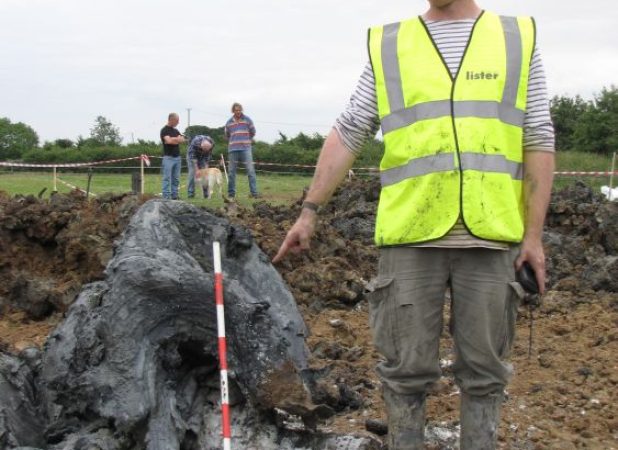
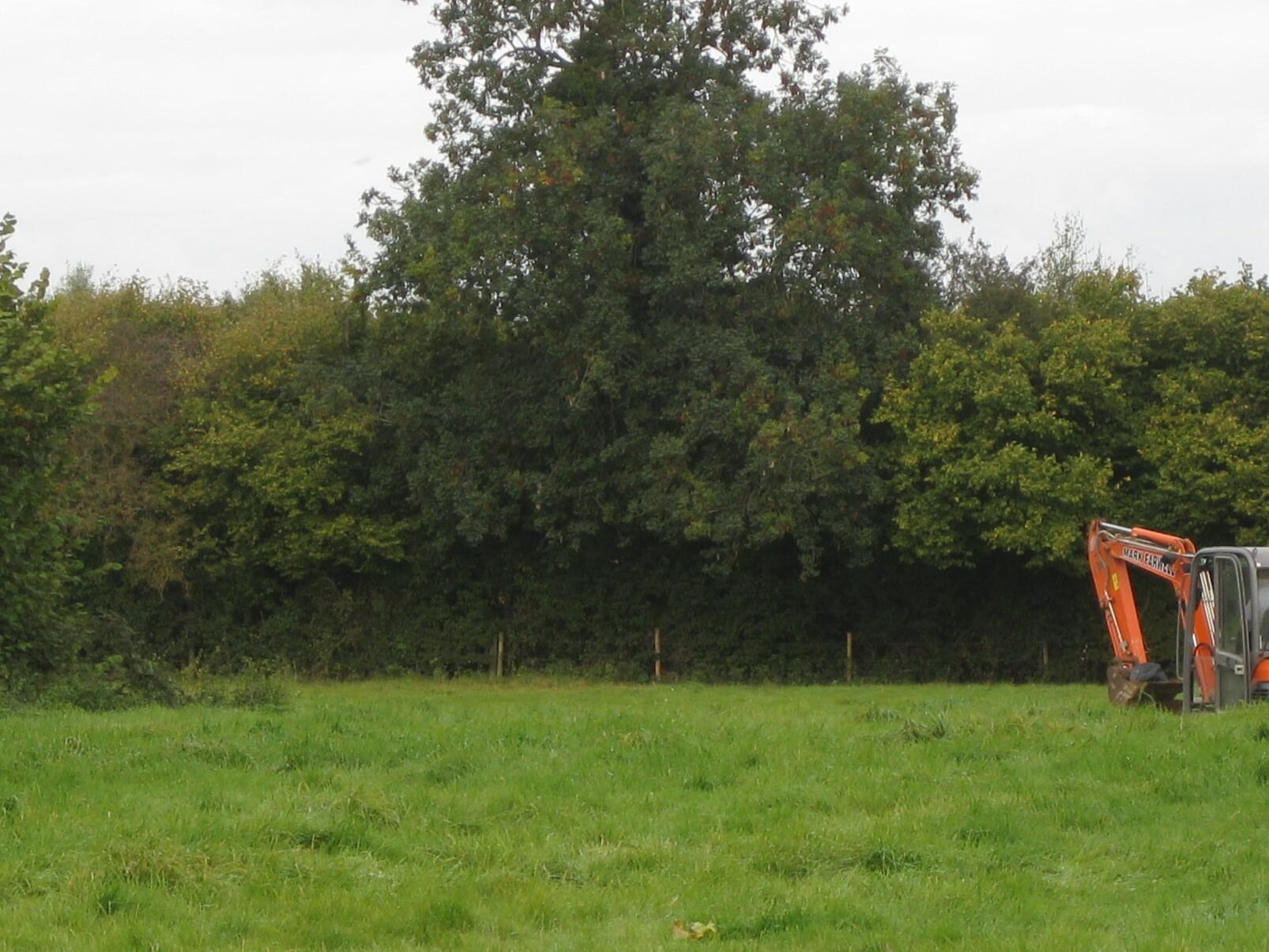
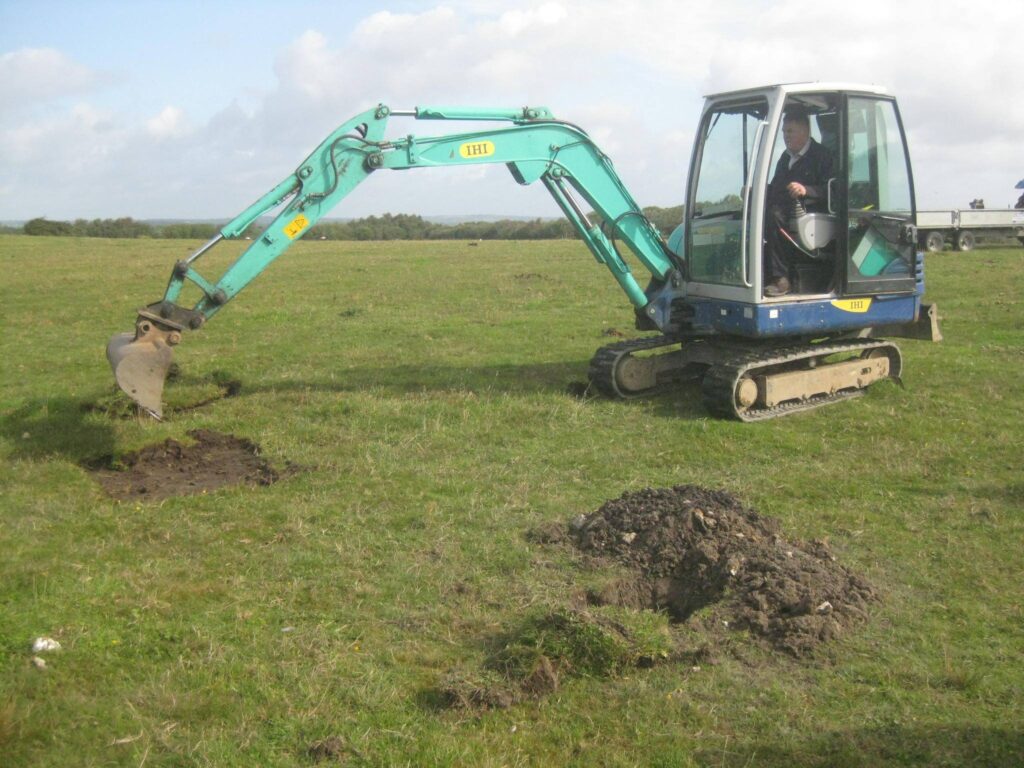
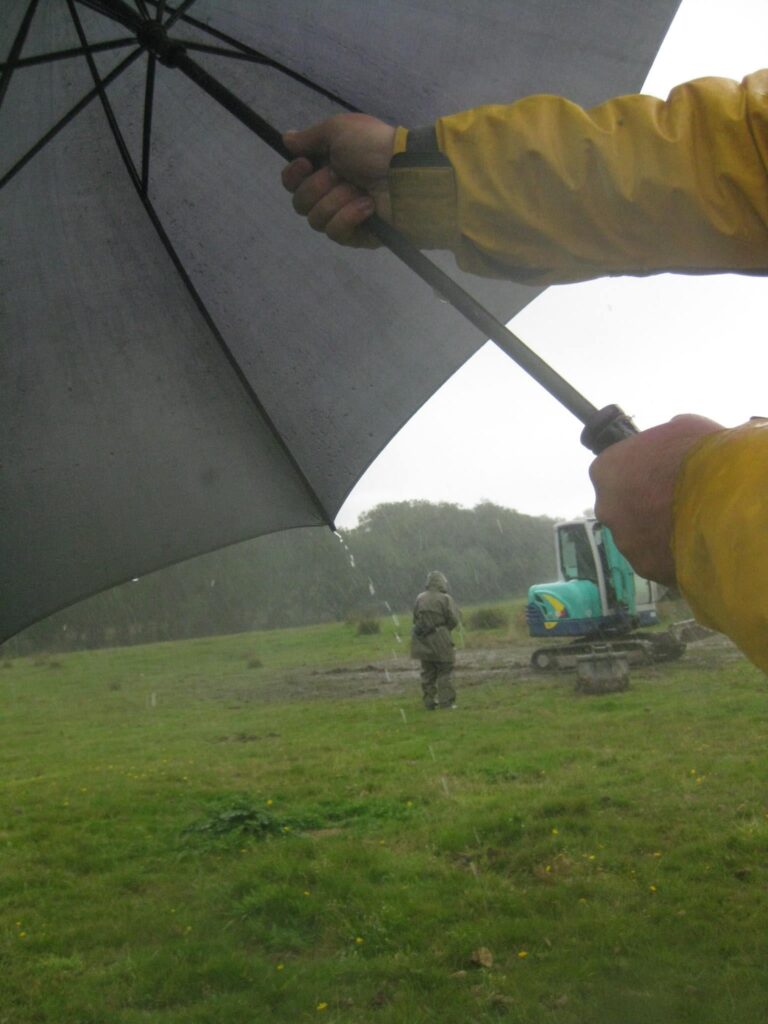
The Me110 came down at Stoborough Heath near Wareham, burying itself deep in the Dorset clay.
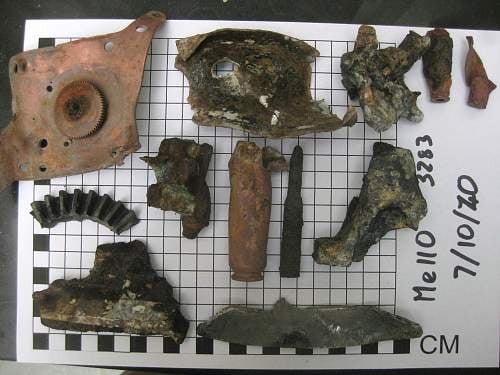
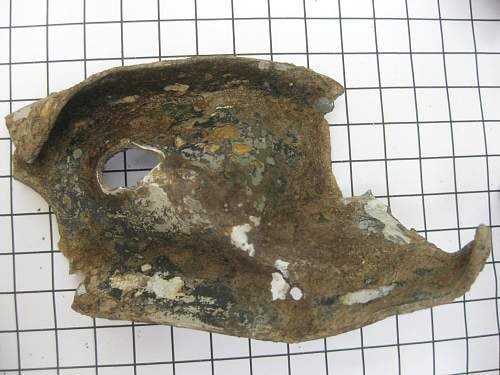
Among the items recovered were fired cases, the lead round from a saddle drum magazine, a section of airframe pierced cleanly by a single .303 bullet hole, and an exploded round fused into a blob of once-molten aluminium. In those fragments lay the engagement itself: attack, return fire, structural failure and impact — the whole fight reduced to a handful of objects lifted from clay.
Elsewhere in the same combat, Spitfire Mk I N3231 of 609 Squadron, flown by Pilot Officer Michael E. Staples, was shot down near the River Stour after being attacked by fighters of JG 2. Staples bailed out with severe burns and survived. His Spitfire later became the subject of a separate, remarkable excavation; read about it here!
This site was excavated for the third and final time in 2011, with MoD licence and the kind permission of the landowners, Natural England. Very little was left after two previous digs, the first in the 1950s, but amongst the last few items recovered were fired cases, the lead round from a saddle drum magazine, a piece of airframe with a single .303 bullet hole and an exploded round fused into a blob of once molten aluminium. Effectively, the whole story of the engagement is in a couple of fragments.
Taken together, the Dorset sites preserve two sides of the same afternoon battle: one British fighter brought down in flames, one German heavy fighter buried on its return.