orders@wingleader.co.uk
Supermarine Spitfire MkIa
RAF Serial: X4773
53 OTU
Pilot: Sgt. Douglas George White (killed)
Date: 27th March 1943
Place: St George’s Super-Ely, near Cardiff
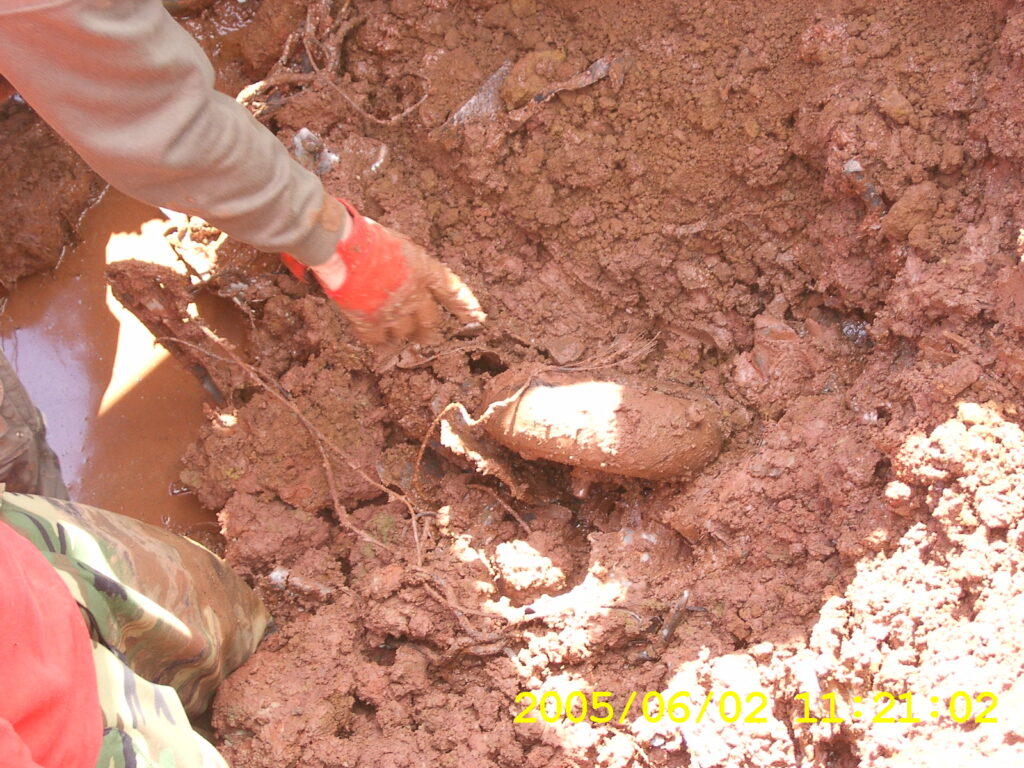
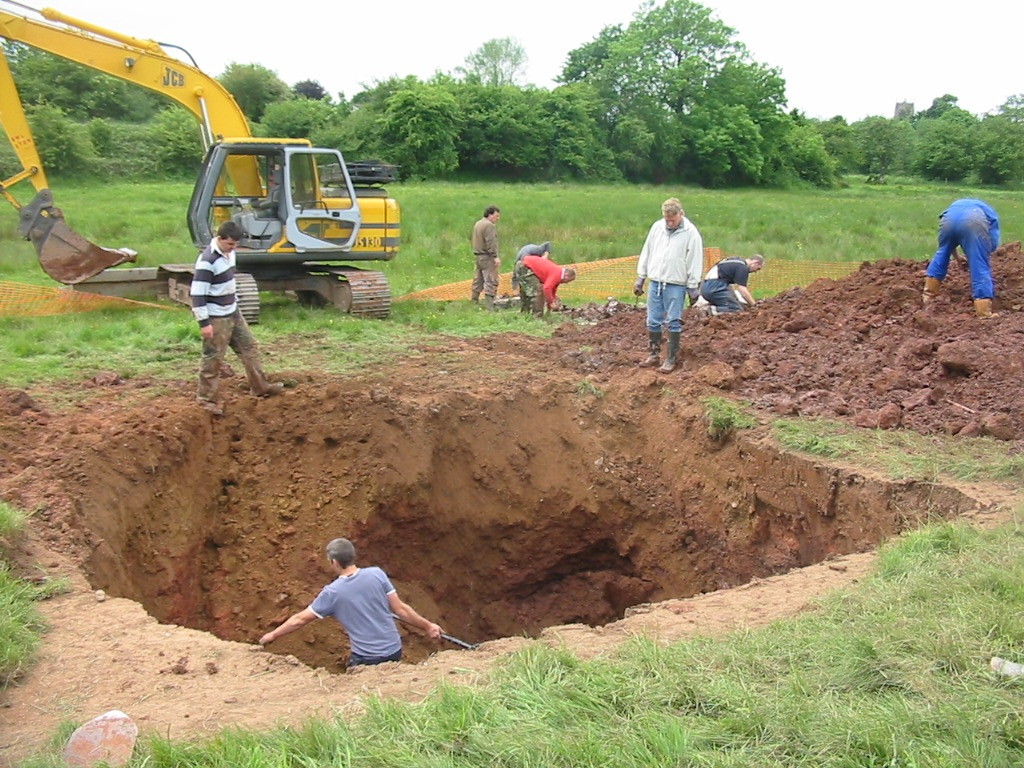
The wreck of X4773 was recovered from a field on the outskirts of Cardiff in May 2005. The pilot, Sgt. Douglas George White, had been sent to climb to 25,000ft for aerobatic practice, but radio contact was lost. A little while later, an Observer Corps post at Cardiff reported a Spitfire diving vertically and impacting the ground, out of view to them, but at St George’s Super Ely, below the Greendown Inn, and close to the now St Fagans museum. Recovery and emergency teams from Ely and RAF Rhoose were quickly at the site, but the pilot was beyond help. He was killed instantly. The following accident investigation found that the pilot had succumbed to a lack of oxygen, and the system was believed to have failed.

This specific Spitfire was number 1295 off the production line at the Eastleigh works, and first flew on the 14th of November 1940. Delivered to the RAF at No.9 MU on the 16th of November, it just missed the Battle of Britain. It stayed in storage until the 9th of January 1941, when it came to No.609 (West Riding)
squadron at RAF Warmwell. Here, its first flight with the squadron took place on the 5th of February, in the hands of a Polish pilot, P/O. T. Nowierski, then again on the 13th of February as part of ‘B’ Flight, taking off at 16:55hrs along with F/Lt. Forshaw to patrol over Swanage, where it encountered and was damaged by a Ju88.
The squadron records state:
“3-2-41 ‘B’ Flt T/O 16:55hrs. Down at 17:40hrs.
F/Lt Forshaw & P/O Nowierski DFC. Patrolling Swanage, saw what they thought to be a friendly A/C
on account of its yellow roundels. Nowierski began a practice attack. He then saw crosses
on its wings, notifying Forshaw, who did not hear him. He then carried out 4 genuine attacks until
he had exhausted all his ammunition. The enemy’s reaction was to dive. As pieces fell off the E/A
(believed to be a Ju-88) after the second attack. But since Nowierski did not see it enter the sea, the E/A
is only claimed as damaged. Return fire was experienced 3 times from top gunner & once from
below, but only slight damage to the Spitfire, probably due to an abrupt breakaway. The incident was
mentioned in the BBC One o’Clock News on the 14th of February.“
X4773 was not used over the following months due to the squadron being equipped with Spitfire Vbs in June. X4773 went through 57 OTU and 131 Squadron on the 31st of December, then finally 53 OTU on 16th of February 1943.

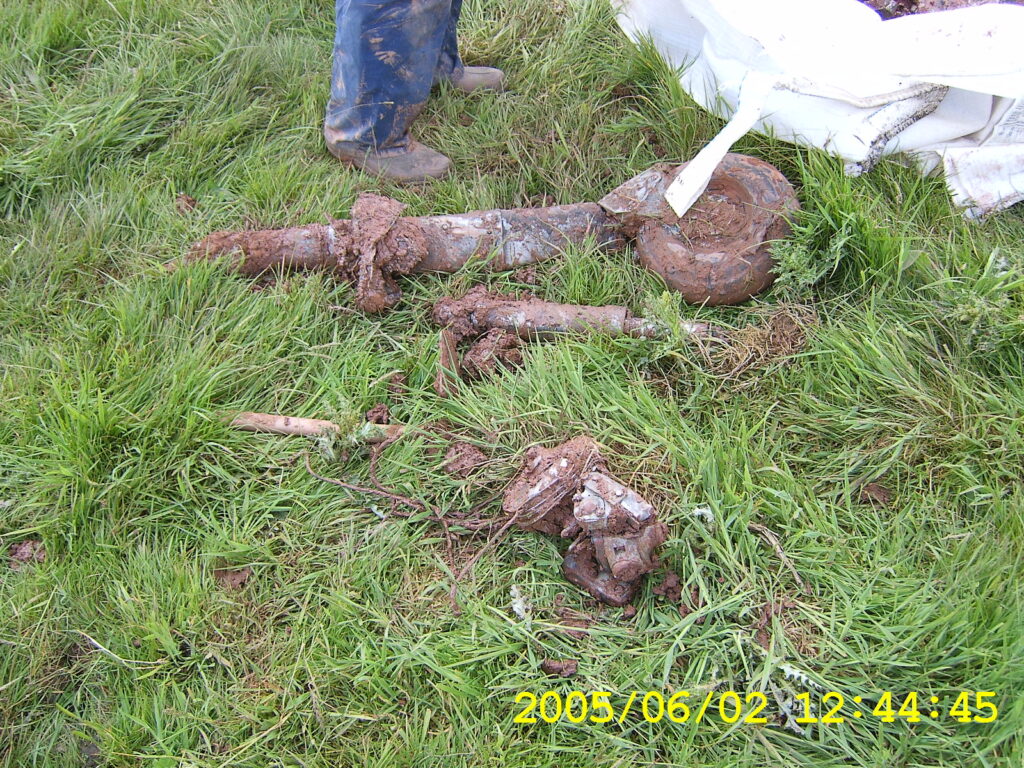
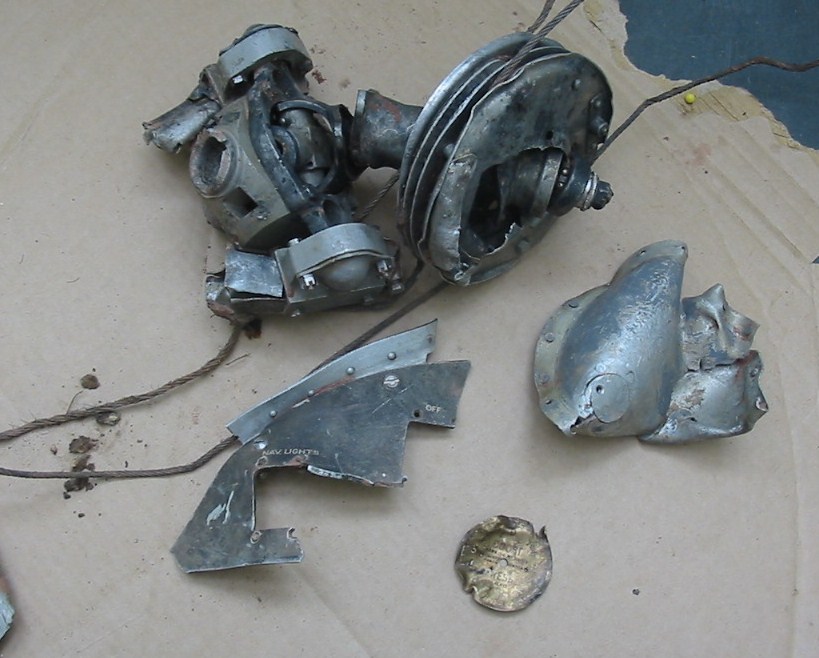
The site was excavated with an MoD licence in 2005. The tailwheel was uncovered at a depth of eight feet, and the engine smashed to pieces against a rock at fourteen feet. In between was a considerable amount of fuselage wreckage and cockpit items. There were also remains of the wooden shoring, used by the maintenance unit when Sgt. White’s body was recovered in 1943. One of the more interesting parts recovered was a cowling blister for the air compressor at the rear of the engine. This had a small repair patch, most likely from its reported encounter with the Junkers 88 off when flying with a different squadron.