orders@wingleader.co.uk
Messerschmitt Me109E-3
Werknummern (serial): 2964
3./Lehrgeschwader 2
Crew: Ltn. Albert Striberny (survived)
Date: 8th July 1940
Place: Buckland Farm, Sandwich, Kent
On the evening of 8th July 1940, at approximately 19.30 hrs, Messerschmitt Bf 109E-3 Werknummer 2964 of 3./LG 2 was shot down in combat near Buckland Farm, Sandwich, Kent. The aircraft dived steeply into the ground and was partially buried to a depth of three feet. The pilot bailed out and survived.
The fighter carried a yellow Mickey Mouse Staffel emblem, and the tail was marked R.109/2964. The pilot, Leutnant Albert Striberny, refused to give any operational information beyond stating that he was quartered at St. Etienne, approximately three miles from his aerodrome at Boulogne.
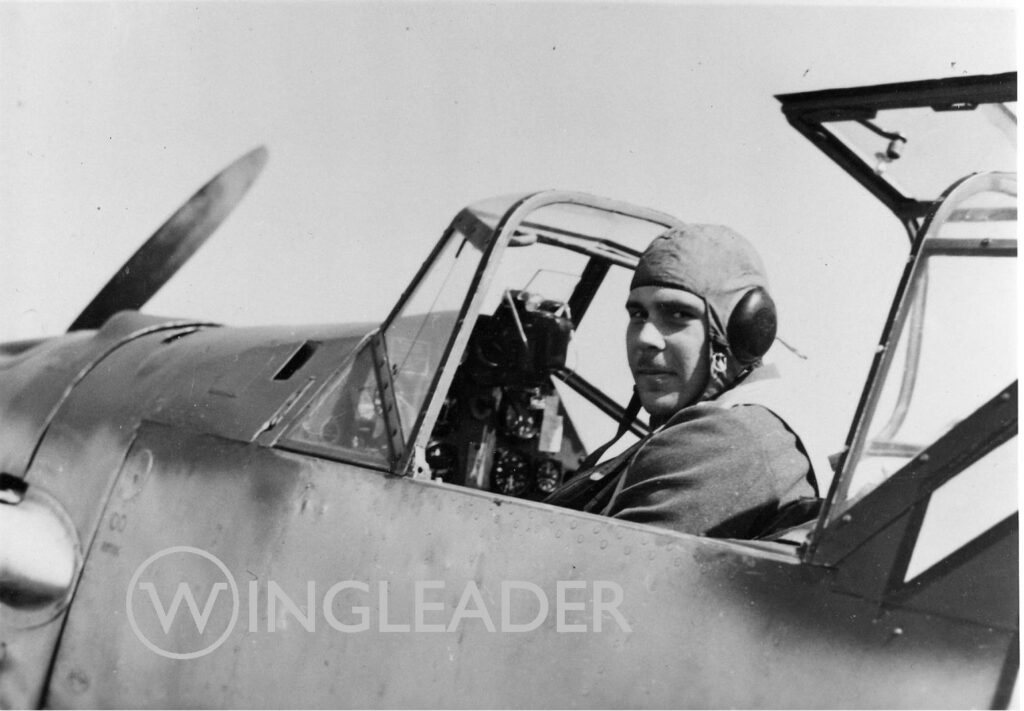
The combat was recorded by Flight Lieutenant B. H. Way of 54 Squadron:
“Way was leading three sections on patrol over Dover at 3,000 feet when he was informed by R/T of three Me 109s at 12,000 feet nearby. Climbing to intercept, he sighted two aircraft above and ahead of Green Section. Identifying them by their black crosses and general appearance, he attacked from astern.
The first 109 received a three-second burst at 200 yards. Glycol streamed from its port radiator along with black smoke. Way broke off to engage a second aircraft rather than risk it gaining position behind him.
The second Messerschmitt dived vertically. Way fired a long burst at approximately 250 yards as it skirted the edge of cloud at 9,000 feet over the coast. The aircraft continued diving inland. At about 5,000 feet, roughly five miles north-west of Deal, the pilot baled out successfully. There was no return fire.”
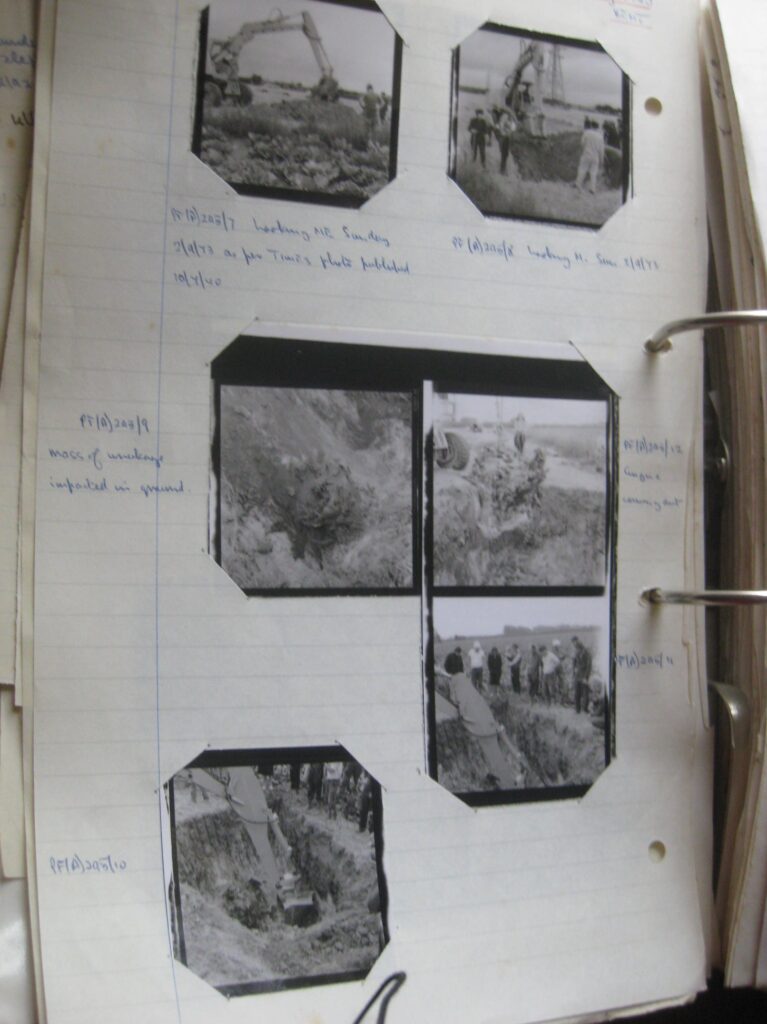
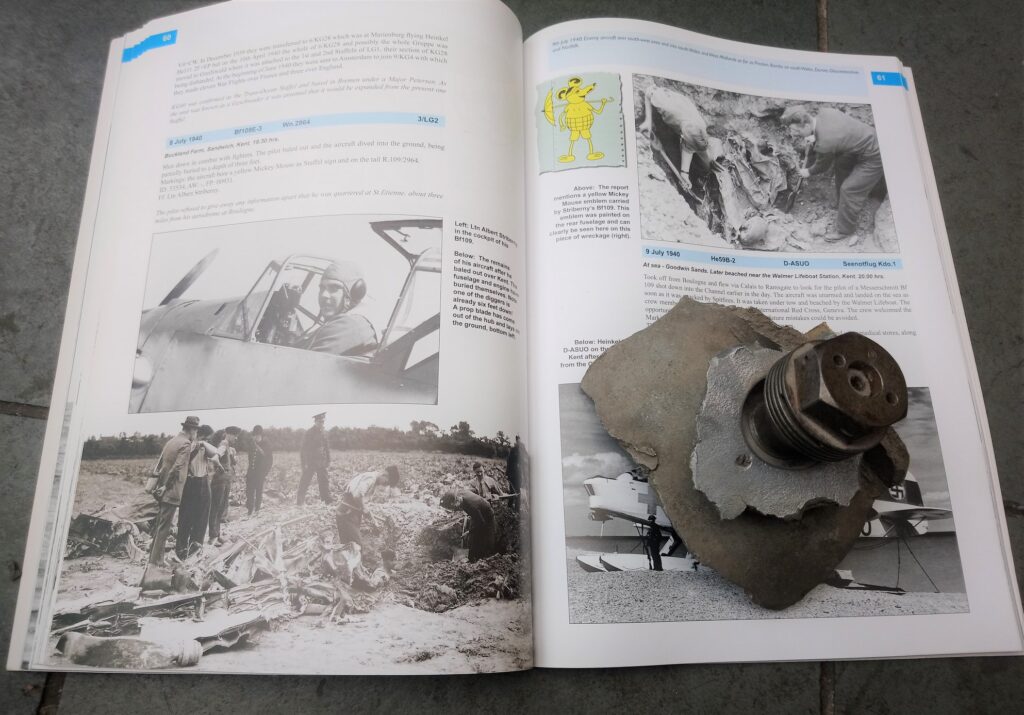
Striberny’s 109 was excavated in 1973 by Dave Buchanan of the Tenterden and Ashford Recovery Group. The dig was recorded by Peter Foote, an enthusiastic student of the Me109.
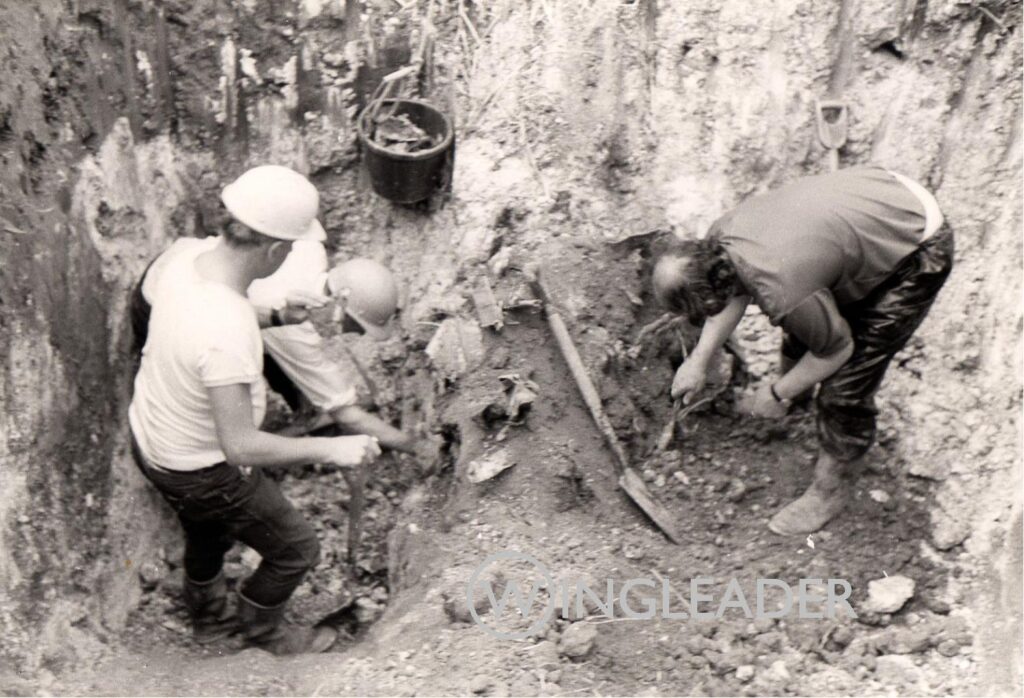
Eyewitnesses reported that the RAF had begun excavation shortly after the crash, but abandoned the effort soon after being photographed in the hole. Although surface fragments were known, the precise crash location eluded searchers for some time — until a farm hand mentioned that he had struck a large piece of metal “over there”.
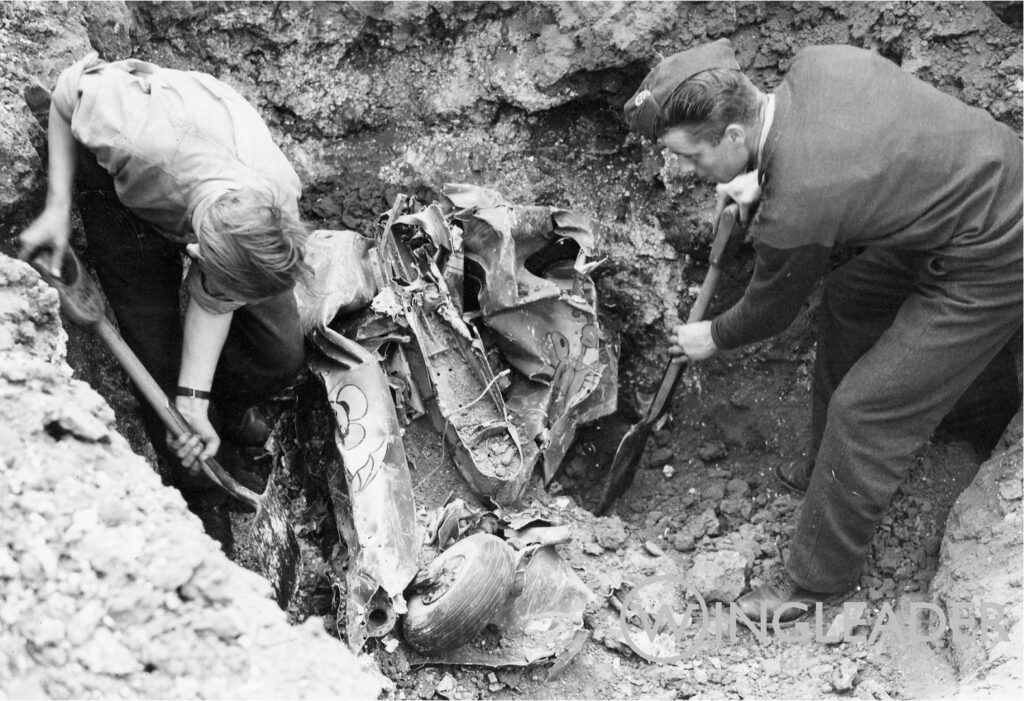
Once correctly located, 39 dated 20mm shell cases confirmed the aircraft’s nationality.
The excavation revealed the smashed Daimler-Benz DB 601 engine, the port undercarriage leg, propeller boss, part of the main spar and cockpit framing to a depth of twelve feet. The control column was recovered in several pieces, the trigger still in the safe position.

Observations made on 4 September 1973 during cleaning of the wreckage noted two oblique .303 strikes in the fuel tank alloy. Petrol that had leaked out and become trapped beneath the outer rubber covering had turned to jelly. The interior of the tank showed repeated traces of flash fire. The port wing had struck the ground first, the aircraft entering at an estimated 70-degree dive.